
'/%3E%3Cuse%20href='%23a'%20transform='rotate(216%20450%20300)'/%3E%3C/g%3E%3Cuse%20href='%23b'%20transform='rotate(72%20450%20300)'/%3E%3C/svg%3E)
In 2026, over 70% of enterprises are repatriating workloads from pure public clouds back to hybrid cloud solutions to escape unpredictable billing and vendor lock-in. This trend validates the frustrations many CTOs face regarding cloud costs. Organizations are increasingly seeking to regain control over their data and IT budgets.
The global market for hybrid cloud reached USD 171.6 billion in 2025, highlighting a significant shift. As we move into 2026, enterprises are turning to robust solutions that balance cost, security, and the demands of AI workloads. ReadySpace is positioned as a strategic partner, providing the foundational architecture necessary for businesses to maintain control over their digital assets.
This transition allows organizations to optimize resource allocation while ensuring sensitive data remains protected. By integrating ReadySpace, IT architects can manage the complexities of modern computing, ensuring high performance across distributed environments.
Key Takeaways
- Enterprises are shifting from public cloud models to hybrid cloud solutions.
- ReadySpace offers essential architecture for digital asset control.
- This shift optimizes resource allocation and data protection.
- IT architects can effectively manage modern computing complexities.
- ReadySpace focuses on secure, high-performance environments.
Introduction: The 2026 Shift from Public Cloud to Hybrid Cloud Infrastructure
The landscape of enterprise technology is evolving rapidly. By 2026, many organizations are expected to shift from solely relying on public cloud services. This change is driven by the recognition of the limitations associated with public providers for mission-critical operations.
According to the IMARC Group, the global market for these flexible solutions is projected to soar to USD 619.6 billion by 2034, reflecting a significant industry pivot. Enterprises are now prioritizing a hybrid strategy to enhance control over their data residency needs while leveraging the latest technological advancements.
This transition enables businesses to modernize their legacy systems. At the same time, they can harness the power of machine learning and big data analytics, gaining a competitive edge. By effectively balancing on-premises and cloud environments, companies can achieve the agility necessary to respond to market changes without compromising security or compliance.
Why Enterprises are Rethinking Their Cloud Strategy
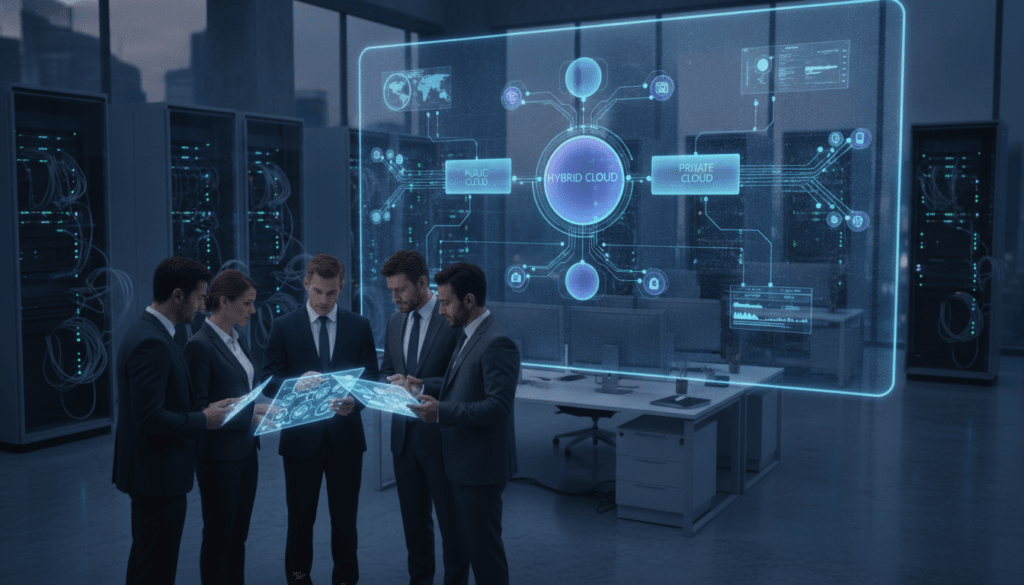
As businesses navigate the complexities of modern technology, a critical shift is occurring. Organizations are increasingly aware of the challenges posed by relying solely on a single cloud provider. This awareness drives a reevaluation of their cloud strategies, focusing on flexibility and control.
One significant concern is vendor lock-in. Companies are actively seeking to diversify their infrastructure across multiple environments. This approach helps mitigate the risks associated with being tied to a single provider. It empowers organizations to adapt and respond to changing needs without incurring excessive costs.
Moreover, unpredictable billing cycles from many public cloud services can lead to budget overruns. IT leaders are looking for more transparent, cost-predictable solutions. This demand for clarity in pricing is reshaping how businesses approach their cloud investments.
Additionally, navigating strict data compliance laws, such as GDPR or HIPAA, requires a sophisticated approach. Many standard public offerings cannot guarantee the necessary data residency. By adopting a hybrid strategy, companies can store sensitive information in compliant, private environments while keeping non-sensitive workloads in the cloud.
This strategic rethink is essential for maintaining operational control. It ensures that businesses remain resilient against the volatility of external pricing models.
Harnessing Hybrid Cloud Infrastructure for Modern Enterprise
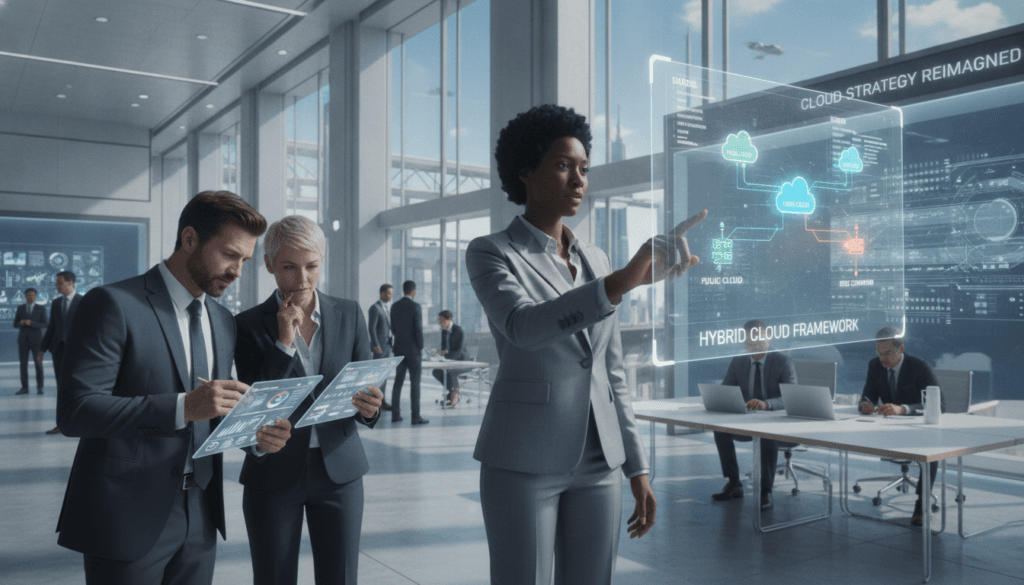
Modern enterprises are increasingly leveraging advanced architectures to optimize their operations. A robust hybrid cloud infrastructure serves as the backbone for organizations, enabling seamless integration of on-premises hardware with scalable cloud resources.
By utilizing virtualization technology, businesses can maximize their existing hardware investments. This approach allows them to extend capabilities into the cloud, enhancing operational flexibility.
Today’s workloads demand a dynamic environment. Compute power must be provisioned on demand to meet the fluctuating needs of global business operations. IT architects must ensure their infrastructure supports containerization, enabling software to operate consistently across any environment.
This strategy provides a solid foundation for digital transformation. Teams can deploy applications faster and with greater reliability than traditional models allow.
| Feature | Benefit | Impact on Operations |
|---|---|---|
| Virtualization | Maximizes hardware use | Reduces costs |
| Dynamic provisioning | Meets fluctuating demands | Enhances agility |
| Containerization | Ensures consistency | Improves deployment speed |
Architecting the Ultimate Hybrid Environment with ReadySpace
As organizations look to enhance their digital strategies, integrating robust solutions is key. ReadySpace offers a powerful way to bridge secure bare metal and private nodes with existing public cloud assets. This integration creates a cohesive and manageable architecture that meets diverse operational needs.
Seamless Integration of ReadySpace with Existing Cloud Assets
ReadySpace enables seamless integration by connecting secure bare metal and private nodes with your existing public cloud services. This approach not only enhances performance but also simplifies management across environments.
Emphasizing Data Sovereignty to Protect Sensitive Data
Prioritizing Data Sovereignty ensures that your most sensitive data remains under your control on ReadySpace infrastructure. This commitment meets the highest standards of security and compliance.
- Organizations can leverage public clouds for burst traffic and non-sensitive workloads, effectively balancing performance needs with strict data protection.
- This architectural design allows IT leads to maintain a consistent security posture across all environments, regardless of where the specific application or data resides.
- By keeping core data on ReadySpace, enterprises avoid the risks associated with data egress fees and the potential loss of control inherent in public cloud-only models.
Enhancing Business ROI through Lower **TCO** and Zero-Trust Security
Organizations are increasingly prioritizing financial efficiency and security as they navigate their digital transformation journeys. Achieving a lower TCO is a primary driver for enterprises adopting a hybrid model. This approach allows for the optimization of infrastructure spending across diverse environments.
Implementing a zero-trust security framework ensures that every connection is verified. This significantly reduces the attack surface across both private and public services. Furthermore, high availability is maintained by strategically distributing workloads. This ensures that business operations continue seamlessly, even if one environment experiences an outage.
The
The IBM Institute for Business Value reports that organizations utilizing a unified hybrid multicloud platform realize 2.5 times the value compared to single-platform approaches.
By focusing on TCO and security, IT architects can demonstrate clear ROI to stakeholders while building a future-proof foundation for the entire organization.
| Strategy | Benefit | Impact on ROI |
|---|---|---|
| Lower TCO | Optimizes spending | Increases financial efficiency |
| Zero-Trust Security | Reduces vulnerabilities | Enhances data protection |
| High Availability | Ensures operational continuity | Minimizes downtime costs |
The Role of AI Workloads in the Hybrid Cloud Landscape
In the era of artificial intelligence, optimizing cloud resources is becoming a crucial focus for enterprises. AI workloads demand substantial compute power and efficient data processing. This makes a hybrid environment ideal for training large language models and performing inferencing tasks.
For instance, Harvard’s Calmon Lab achieved over 2,000 tokens per second by deploying a high-performance hybrid solution with IBM. This showcases the immense potential of this architecture in handling demanding workloads.
Optimizing resource allocation for AI initiatives involves strategically placing compute-heavy tasks in the most effective environment. This could be on-premises or within public cloud services, depending on the specific requirements.
As AI agents evolve to become more autonomous, the need for fast and trusted access to data across all environments becomes critical. The flexibility of hybrid cloud setups allows enterprises to scale AI resources efficiently, ensuring that innovation is never limited by hardware or software constraints.
| AI Workload Feature | Benefit | Impact on Operations |
|---|---|---|
| Massive Compute Power | Supports complex models | Enhances performance |
| Data Processing Efficiency | Reduces latency | Improves response times |
| Scalability | Adapts to demand | Ensures continuous innovation |
Balancing On-Premises and Cloud Environments for Agility and Control
To thrive in today’s digital landscape, businesses must adeptly balance their on-premises and cloud resources. This balance allows organizations to maintain control over legacy systems while gaining the agility offered by modern cloud solutions.
According to McKinsey & Company, the use of AI in business operations has doubled since 2017. This growth necessitates a highly responsive infrastructure capable of managing complex and evolving workloads.
IT architects must design systems that enable fluid movement of data and applications between environments. This ensures maximum operational efficiency and performance.
Maintaining this equilibrium is essential for organizations needing to comply with regional data residency laws while benefiting from the global reach of public cloud providers. By achieving this balance, enterprises can respond to market demands swiftly and precisely, ensuring their infrastructure remains a competitive advantage.
“Balancing on-premises and cloud environments is key to maintaining operational control.”
| Aspect | Importance | Outcome |
|---|---|---|
| On-Premises Control | Maintains legacy system integrity | Ensures stability |
| Cloud Agility | Facilitates rapid scaling | Enhances responsiveness |
| Data Movement | Supports operational efficiency | Optimizes performance |
Implementing a Unified Security and Governance Framework
As organizations embrace new technologies, a robust security framework is essential. A unified security and governance framework protects data across hybrid environments. This ensures consistent policy enforcement, regardless of the underlying infrastructure.
Establishing a zero-trust architecture is vital. This model requires verifying every connection between users, devices, or services before granting access to any part of the hybrid setup. By integrating security into every layer, from the physical data center to the public cloud, organizations can significantly enhance their defenses.
Continuous monitoring and management of security risks are crucial. The shared responsibility model in the cloud necessitates proactive oversight from the organization. Security tools must provide end-to-end visibility, allowing IT teams to detect and respond to threats in real-time across all distributed environments.
Standardizing governance ensures compliance requirements are met consistently. This reduces the risk of data breaches and regulatory penalties, ultimately protecting the organization’s reputation.
| Security Aspect | Importance | Outcome |
|---|---|---|
| Unified Framework | Consistent policy enforcement | Enhanced data protection |
| Zero-Trust Model | Verifies all connections | Minimized access risks |
| Continuous Monitoring | Proactive risk management | Improved threat response |
Overcoming Legacy Challenges with Modern Cloud Strategies
Legacy systems can hinder growth, making modernization a top priority for businesses. Migrating outdated applications to cloud-native solutions enables enterprises to modernize their operations without a risky, all-or-nothing approach.
Delta Air Lines exemplifies how a strategic migration can transform operations and enhance customer experiences globally. Their successful transition showcases the benefits of adopting a hybrid approach.
AI tools play a significant role in modernizing legacy code, such as COBOL. These tools assist in refactoring applications to function efficiently within a contemporary hybrid setup.
IT leaders must emphasize containerization. This ensures that modernized applications can be deployed consistently across both on-premises and public environments.
This modernization is crucial for reducing technical debt, which often slows innovation and limits the scalability of traditional enterprise applications.
Future Trends and Technological Advancements in Hybrid Cloud
Emerging trends indicate a significant shift in how businesses approach their cloud strategies. A recent Gartner study shows that over 50% of global organizations plan to prioritize sustainability in their cloud procurement decisions by 2029. This focus on energy efficiency is reshaping the landscape of resource management.
The rise of agentic AI will further drive the need for infrastructure that supports autonomous workflows. This technology demands real-time data processing capabilities, making hybrid setups essential.
Technological advancements in multicloud interoperability will ease the movement of workloads between different providers. This flexibility minimizes the need for extensive re-architecting, streamlining operations.
As edge computing continues to expand, hybrid solutions will extend into distributed environments. This brings compute power closer to IoT devices and local users, enhancing performance and responsiveness.
Enterprises investing in these future-ready technologies today will be better positioned to lead their industries in innovation and operational excellence.
Driving Innovation and Operational Excellence with ReadySpace
Driving innovation is essential for businesses aiming to thrive in an evolving digital landscape. ReadySpace offers high-performance solutions that enable organizations to run workloads where they make the most sense.
Partnering with ReadySpace means having the tools to manage the complexities of modern environments effectively. This collaboration allows IT teams to focus on strategic initiatives rather than getting bogged down in infrastructure management.
- ReadySpace understands the unique challenges of today’s hybrid setups.
- Operational excellence is achieved through reliable solutions that enhance efficiency.
- We invite you to book a hybrid cloud architecture review with ReadySpace to discover how our offerings can optimize your specific business needs.
- Leverage our expertise to accelerate your digital transformation and ensure your infrastructure supports long-term growth.
- ReadySpace is committed to delivering the performance, security, and control necessary for success in a competitive digital landscape.
Conclusion
The transition to a flexible computing model is no longer optional for enterprises aiming to balance cost, security, and the demands of modern AI workloads. By selecting a strategic partner, organizations can navigate the complexities of data sovereignty and vendor lock-in.
ReadySpace offers the essential foundation for businesses to modernize their legacy applications while ensuring control over sensitive, mission-critical data.
As the market evolves toward 2034, agility and responsiveness will define the leaders in every major industry sector. We encourage IT architects and enterprise leads to evaluate their current cloud strategy and consider how a hybrid approach can drive future innovation.